
Search Results: %25252525252525257Bsearch_term_string%25252525252525257D

View article.
To assess relationships between fire spread rates and landscape burn severity patterns, we used satellite fire detections to create day-of-burning maps for 623 fires comprising 4267 single-day events within forested ecoregions of the southwestern United States. We related satellite-measured burn severity and a suite of high-severity patch metrics to daily area burned. Extreme fire spread events (defined here as burning > 4900 ha/day) exhibited higher mean burn severity, a greater proportion of area burned severely, and increased like adjacencies between high-severity pixels. Furthermore, increasing daily area burned also resulted in greater distances within high-severity patches to live tree seed sources. High-severity patch size and total high-severity core area were substantially higher for fires containing one or more extreme spread events than for fires without an extreme event. Larger and more homogenous high-severity patches produced during extreme events can limit tree regeneration and set the stage for protracted forest conversion. These landscape outcomes are expected to be magnified under future climate scenarios, accelerating fire-driven forest loss and long-term ecological change.

View chapter.
In this chapter, we identify and classify sources of uncertainty using an established analytical framework, and summarize results graphically in an uncertainty matrix. Our analysis facilitates characterization of the underlying nature of each source of uncertainty (inherent system variability versus limited knowledge), the location where it manifests within the modeling process (inputs, parameters, model structure, etc.), and its magnitude or level (on a continuum from complete determinism to total ignorance). We adapt this framework to the wildfire context by identifying different planning horizons facing fire managers (near‐, mid‐, and long‐term) as well as modeling domains that correspond to major factors influencing fire activity (fire behavior, ignitions, landscape, weather, and management). Our results offer a high‐level synthesis that ideally can provide a sound informational basis for evaluating current modeling efforts and that can guide more in‐depth analyses in the future. Key findings include: (1) uncertainties compound and magnify as the planning horizon lengthens; and (2) while many uncertainties are due to variability, gaps in basic fire-spread theory present a major source of knowledge uncertainty.
View article.
To assess the effects of seeding on the genetic diversity of wildland populations, we conducted a genetic survey of bluebunch wheatgrass (Pseudoroegneria spicata) populations within the perimeter of a recent megafire in southeastern Oregon and southwestern Idaho, United States. We genotyped 760 samples with 10 polymorphic loci. We found similar genetic diversity in populations four to 5 years after seeding compared to unseeded populations that were either burned or unburned. Furthermore, genetic diversity neither increased nor decreased with distance from the fire’s edge, suggesting that wind dispersal from neighboring remnant populations plays a minor role in immediate post-fire recovery compared to resprouting and germination from the seed bank. Though no change was detected in the short term, this survey of genetic variation after a post-fire seeding provides an empirical baseline that can be used to track changes in genetic diversity of these wildland populations over time.
View report.
This report makes the case that forest restoration should be at least equal to other land management priorities because large-scale restoration is necessary for the sake of forest ecosystem integrity now and into the future. Another proposal is to switch the “default” rule in federal planning documents that currently have to “justify” managed wildland fire; instead, U.S. federal agencies should be required to disclose the long-term ecological impacts of continued fire suppression.
View synthesis.
There are thousands of abandoned mine land (AML) sites in the U.S. that need to be restored to reduce wind and water erosion, provide wildlife forage, shade streams, and improve productivity. Biochar created from woody biomass that would normally be burned in slash piles can be applied to soil to improve soil properties and is one method to restore AML soil productive capacity. Using this ‘waste’ biomass for biochar and reclamation activities will reduce wildfire risk, air pollution from burning, and particulates released from burning wood. Biochar has the potential to improve water quality, bind heavy metals, or decrease toxic chemical concentrations, while improving soil health to establish sustainable plant cover, thereby preventing soil erosion, leaching, or other unintended, negative environmental consequences. Using forest residues to create biochar also helps reduce woody biomass and improves forest health and resilience. We address concerns surrounding organic and inorganic contaminants on the biochar and how this might affect its’ efficacy and provide valuable information to increase restoration activities on AMLs using biochar alone or in combination with other organic amendments. Several examples of AML biochar restoration sites initiated to evaluate short- and long-term above- and belowground ecosystem responses are presented.
View article.
The Sagebrush Treatment Evaluation Project (SageSTEP) evaluated the ecological effects of prescribed fire and cut‐and‐leave treatments in sagebrush communities experiencing tree expansion in North American cold desert shrublands. We used 10 yr of data from the SageSTEP network to test how treatments interacted with pre‐treatment tree dominance, soil climate, and time since treatment to affect plant functional groups and dominant species. Non‐sprouting shrub (Artemisia spp.), sprouting shrub, perennial graminoid, and annual grass responses depended on tree dominance and soil climate, and responses were related to the dominant species’ life‐history traits. Sites with warm and dry soils showed increased perennial graminoid but reduced Artemisia shrub cover across the tree dominance gradient after prescribed burning, while sites with cool and moist soils showed favorable post‐burn responses for both functional types, particularly at low to moderate tree dominance. Cut‐and‐leave treatments sustained or increased native perennial plant functional groups and experienced smaller increases in exotic annual plants in both soil climates across the tree dominance gradient. Both treatments reduced biocrust cover. Selecting appropriate tree‐reduction treatments to achieve desired long‐term outcomes requires consideration of dominant species, site environmental conditions, and the degree of woodland expansion. Careful selection of management treatments will reduce the likelihood of undesirable consequences to the ecosystem.
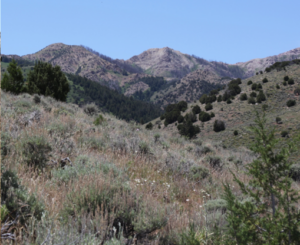
This special issue of Rangeland Ecology and Management is dedicated to applying the Sagebrush Conservation Design (SCD) to improve conservation outcomes across the sagebrush biome in the face of pervasive ecosystem threats.
Articles included:
State of the sagebrush: Implementing the Sagebrush Conservation Design to save a biome
Closing the conservation gap: Spatial targeting and coordination are needed for to keep pace with sagebrush losses
Climate change amplifies declines in sagebrush ecological integrity
Well-connected core areas retain ecological integrity of sagebrush ecosystems amidst overall declines 2001–2021
Spatial prioritization of conifer management to defend and grow sagebrush cores
A strategic and science-based framework for management of invasive annual grasses in the sagebrush biome
Modeling cropland conversion risk to scale-up averted loss of core sagebrush rangelands
Characterizing wildfire risk for the Sagebrush Conservation Design
An assessment of conservation opportunities within sagebrush ecosystems of US National Parks and Wildlife Refuges
Tool to promote stepping down the Sagebrush Conservation Design to local conservation planning
Exploring the sage grouse initiative’s role in defending and growing sagebrush core areas
Satellite remote sensing to assess shrubland vegetation responses to large-scale juniper removal in the northern Great Basin
Cooperative conservation actions improve sage-grouse population performance within the bi-state distinct population segment
Evaluating the Sagebrush Conservation Design Strategy through the performance of a sagebrush indicator species
How a Sagebrush Conservation Strategy benefits rangeland birds
Carbon Security Index: Novel approach to assessing how secure carbon is in sagebrush ecosystems within the Great Basin
Using technical transfer to bridge science production and management action
Assessing conservation readiness: The where, who, and how of strategic conservation in the sagebrush biome
Where do we go from here with sagebrush conservation: A long-term perspective?
There is no hope without change: A perspective on how we conserve the sagebrush biome
View article.
We tested how sagebrush transplant survival and size (canopy volume) are affected by age at the time of planting (10 classes, 6−24 wk), planting season (fall versus spring), and invasive annual grass competition (low/high) with a randomized factorial design over 2 yr. Survival was lower for age classes under 10 or 12 wk (in yr 1 and 2, respectively) but relatively similar from 12 to 24 wk. Fall-planted transplants had lower survival but increased canopy volume compared with spring-planted transplants. Survival and canopy volume decreased with competition with annual grasses. Our results suggest that land managers should consider planting younger transplants than previously thought and controlling invasive annual grasses before planting sagebrush transplants to increase long-term survival and canopy volume.

View synthesis.
This review revealed tradeoffs in woody fuel treatments between reducing canopy fuels vs. increasing understory herbaceous vegetation (fuels) and fire behavior. In pinyon-juniper expansion areas, all treatments decreased crown fire risk. Prescribed fire and cut and broadcast burn treatments reduced woody fuels long-term but had higher risk of invasion. Mechanical treatments left understory vegetation intact and increased native perennial plants. However, cut and leave treatments increased downed woody fuel and high-intensity wildfire risk, while cut and pile burn and mastication caused localized disturbances and annual grass invasion. Ecological outcomes depended on ecological resilience; sites with warm and dry conditions or depleted perennial native herbaceous species experienced lower recovery and resistance to invasive annual grasses. In invasive annual grass dominated areas, high-intensity targeted grazing reduced fine fuels but required retreatment or seeding; in intact ecosystems with relatively low shrub cover, dormant season targeted grazing reduced fine fuel and thus fire spread. Preemergent herbicides reduced annual grasses with differing effects in warm and dry vs. cool and moist environments.
View article.
While increased length and intensity of wildfire seasons in many places have led to more concern about wildland firefighter safety, we believe ethnography has been underutilized as a method within this domain. In response, we begin building a shared idiom for ethnographic engagement with wildland firefighter safety and similar occupations. We draw on ethnographic approaches to late industrialism to develop a method called discursive risk analysis (DRA) as an initial stage in a broader collaborative and generative research practice. By collaborative, we mean cooperation among stakeholder, disciplinary, professional, and other groups. We use DRA to analyze ethnographic data and documentary sources relevant to discussions of ‘the Big Lie’ among firefighters and agency leadership. The Big Lie is a term that both firefighters and agency leaders used to suggest that wildland firefighters are being harmed by agency discourse that says firefighters will be kept safe despite the unavoidable danger of the job. It is important to the Big Lie discussion that this harm is conceptualized by firefighters as discursively driven, necessitating a research method attentive to discourse. Discursive Risk Analysis of the Big Lie discussion suggests two discursive gaps that may result in two discursive risks. The first gap, found in agency discourse, is that ‘everyone knows the job is dangerous’ but ‘zero fatalities is a reasonable goal.’ This gap is associated with a discursive risk, a possible decrease in trust among wildland firefighters in agency leadership. The second gap, observed in firefighter discourse, is that ‘the job is dangerous’ but ‘no one will get hurt today.’ This gap is associated with another discursive risk, the possibility of decreased situational awareness. Finally, we clarify each of these gaps and risks through two anthropological concepts (the Sapir–Whorf hypothesis and the public secret) that can bring new perspectives to discussions about institutional cultures of health and safety.