

Search Results: %2525252525257Bsearch_term_string%2525252525257D

View brief.
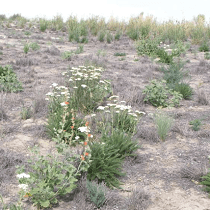
Indaziflam (Rejuvra®, Bayer) is a pre-emergent herbicide that can manage annual grass seed banks and provide long-term reductions with minimal harm to established perennial vegetation. Indaziflam provided significant, long-term reductions in cheatgrass cover and density in invaded sagebrush-grasslands in western Wyoming without negative effects on native vegetation species richness. Observations from the site after an unplanned wildfire suggest that treatment three years earlier may have prevented the fire from burning significant areas of two large aerial treatment plots, likely by reducing the amount and continuity of fine fuel. These results suggest that indaziflam may help managers mitigate the impacts of invasion and proactively protect intact shrublands from cheatgrass-altered fire regimes.

View article.
Fuel treatments are widely used to alter fuels in forested ecosystems to mitigate wildfire behavior and effects. However, few studies have examined long-term ecological effects of interacting fuel treatments (commercial harvests, pre-commercial thinnings, pile and burning, and prescribed fire) and wildfire. Using annually fitted Landsat satellite-derived Normalized Burn Ratio (NBR) curves and paired pre-fire treated and untreated field sites, we tested changes in the differenced NBR (dNBR) and years since treatment as predictors of biophysical attributes one and nine years after the 2007 Egley Fire Complex in Oregon, USA. We also assessed short- and long-term fuel treatment impacts on field-measured attributes one and nine years post fire.
View paper.
Results indicate that postfire seeding has lasting effects on vegetation composition and structure, implying that seed mixes should be carefully formulated to promote long-term management objectives. Seed mixes containing large amounts of competitive introduced species may be especially effective for long-term cheatgrass suppression, but native-only mixes can also serve this purpose to a lesser degree while avoiding drawbacks of non-native species introductions.
View article.
We developed a framework for identifying which biotic traits would provide the best initial indication of longer-term target restoration goals and applied the framework to restoration drill-seedings of deep-rooted perennial bunchgrasses (DRPBGs) used to rehabilitate and restore semiarid rangelands threatened by exotic annual grasses (EAGs, e.g. cheatgrass) and the recurrent wildfire that EAGs cause. Initial traits measured included cover, basal diameter, height, and density (#plants/area) of DRPBGs and cover of EAGs and Sandberg bluegrass (Poa secunda, POSE, a disturbance-adapted perennial). The longer-term target objective was ≥25 % DRPBG cover and ≤13 % EAG cover by the 5th year following drill-seedings. Measurements were made on 112 plots spanning 113,000 ha in sagebrush steppe on the Soda wildfire scar, in the Northern Great Basin, USA. Traits of DRPBGs tended to be uncorrelated with one another, thus each was informative in describing vegetation condition. Where DRPBG cover was initially >17 %, it tended to become >25 % by the 5th-year post-seeding. In plots that overcame an initial risk of not meeting the target objective (i.e. <17 % initial DRPBG cover), DRPBG tended be large DRPBGs (>22.8 cm height) and plots also had >7 % cover of POSE. Additional “sets” of initial vegetation traits were also predictive of longer-term restoration success or failure. Restoration drill-seeding of DRPBGs is a key but varied-outcome tool for breaking the exotic grass-fire cycle, and, contrary to a conventional tendency to rely on a limited number of mean traits such as % cover, a suite of biotic traits appears necessary to monitor to reliably know if trials are likely to yield success.

View article.
In this review, we discuss current research on forest carbon risk from natural disturbance under climate change for the United States, with emphasis on advancements in analytical mapping and modeling tools that have potential to drive research for managing future long-term stability of forest carbon. As a natural mechanism for carbon storage, forests are a critical component of meeting climate mitigation strategies designed to combat anthropogenic emissions. Forests consist of long-lived organisms (trees) that can store carbon for centuries or more. However, trees have finite lifespans, and disturbances such as wildfire, insect and disease outbreaks, and drought can hasten tree mortality or reduce tree growth, thereby slowing carbon sequestration, driving carbon emissions, and reducing forest carbon storage in stable pools, particularly the live and standing dead portions that are counted in many carbon offset programs. Many forests have natural disturbance regimes, but climate change and human activities disrupt the frequency and severity of disturbances in ways that are likely to have consequences for the long-term stability of forest carbon. To minimize negative effects and maximize resilience of forest carbon, disturbance risks must be accounted for in carbon offset protocols, carbon management practices, and carbon mapping and modeling techniques. This requires detailed mapping and modeling of the quantities and distribution of forest carbon across the United States and hopefully one day globally; the frequency, severity, and timing of disturbances; the mechanisms by which disturbances affect carbon storage; and how climate change may alter each of these elements. Several tools (e.g. fire spread models, imputed forest inventory models, and forest growth simulators) exist to address one or more of the aforementioned items and can help inform management strategies that reduce forest carbon risk, maintain long-term stability of forest carbon, and further explore challenges, uncertainties, and opportunities for evaluating the continued potential of, and threats to, forests as viable mechanisms for forest carbon storage, including carbon offsets. A growing collective body of research and technological improvements have advanced the science, but we highlight and discuss key limitations, uncertainties, and gaps that remain.

View report.
Almost half of the full community costs of wildfire are paid for at the local level, including homeowners, businesses, and government agencies. Many of these costs are due to long-term damages to community and environmental services, such as landscape rehabilitation, lost business and tax revenues, and property and infrastructure repairs. By comparison, our analysis suggests suppression costs comprise around nine percent of total wildfire costs. The remaining costs include short-term expenses, or those costs occurring within the first six months—and long-term damages accruing during many months and years following a wildfire. Communities at risk to wildfires can reduce wildfire impacts and associated costs through land use planning.
View synthesis.
We performed a systematic review on the global responses of arthropods, birds, mammals, reptiles, and amphibians to different fire regimes. Specifically, we focused on assessing how fire severity, history, and frequency modulate the effect of fire on the richness and abundance of faunal communities. We conducted a systematic review of 566 papers retrieved from the Scopus database. Our selection criteria excluded studies without data on species richness or abundance. We also excluded studies without adequate controls and those without information about the fire regime of the study zone. After careful examination, we used data from 162 studies to perform a quantitative meta-analysis. From the 162 studies meeting our selection criteria, nearly 60% of the studies are from North America, 25% from Australia, 11% from Europe, and 4% from the tropics. According to the ecological role of fire, 90% of the studies were carried out in fire-dependent ecosystems (i.e., conifer forests, natural savannas, pastures). Finally, 40% of the studies analyzed birds, 22% mammals, and 20% arthropods. The meta-analysis of the available evidence indicates that fire history is an important modulator of animal richness and abundance. Whether negative or positive, animal responses depended on the time since the last fire event. Considering that short-term studies may not capture such a long-term effect on fauna, this translates to more challenges at implementing fire management strategies. Whether or not we can anticipate the impact of the fire will then depend on future efforts to implement long-term research.
View article.
Here, we model relationships between satellite observations of fire radiative power (FRP) and contemporaneous fire weather index, and then we project how FRP is likely to change under near-term warming scenarios. The models project widespread growth in FRP, with increases expected across 88% of fire-prone areas worldwide under 1.5 °C warming. Projected increases in FRP were highest in the Mediterranean biome and Temperate Conifer Forest biome, and increases were twice as large under 2 °C warming compared to 1.5 °C. Disaster-prone areas of the wildland-urban interface saw an average of 3.6 times greater projected increases than non-disaster-prone areas, suggesting wildfire impacts will intensify most in regions already vulnerable to dangerous wildfires. These findings emphasise the urgent need to anticipate changes to fire behaviour and proactively manage wildland-urban ecosystems to reduce future fire intensity.
View article.
Short-term fire risk reduction and long-term resilience objectives can be complementary within a landscape, but ecosystem resilience is not a guaranteed co-benefit when fire risk reduction is the primary objective. Rather, improving ecosystem resilience cannot be achieved quickly because many desired forest conditions require both deliberate strategic action to guide the location, character, and timing of management as a disturbance agent, as well as adequate time for landscape conditions to improve and resilience benefits to be realized.

View article.
Resource managers often need scientific information to match their decisions (typically short-term and local) to complex, long-term, large-scale challenges such as adaptation to climate change. In such situations, the most reliable route to actionable science is coproduction, whereby managers, policy makers, scientists, and other stakeholders first identify specific decisions to be informed by science, and then jointly define the scope and context of the problem, research questions, methods, and outputs, make scientific inferences, and develop strategies for the appropriate use of science. This study presents seven recommended practices intended to help scientists, managers, funders and other stakeholders carry out a coproduction project, one recommended practice to ensure that partners learn from attempts at coproduction, and two practices to promote coproduction at a programmatic level.